
Bearbeitung
Annette Bähr, MBA Eng.
„Klimaneutralität in allen Handlungsfeldern bis 2031“ – hierzu hat sich die Leibniz Universität Hannover in der Leitlinie zum Klima- und Umweltschutz verpflichtet. Die Gebäude des Campus haben aufgrund des nicht unerheblichen Energieverbrauchs und der daraus resultierenden hohen CO2-Emissionen eine zentrale Bedeutung.
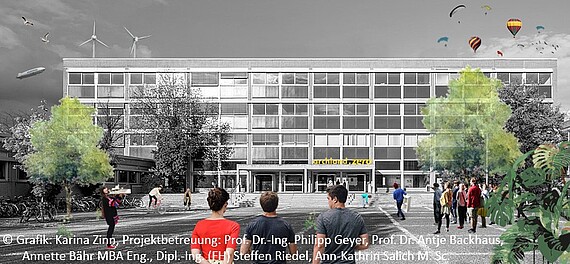
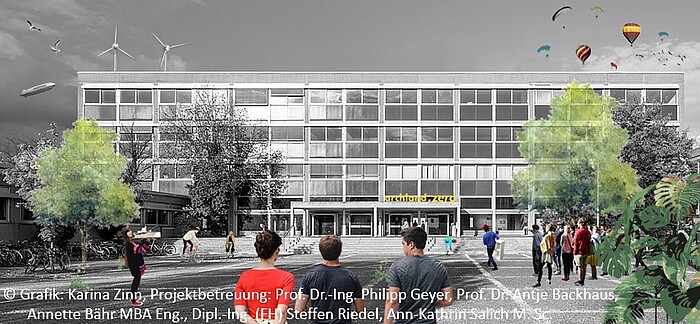
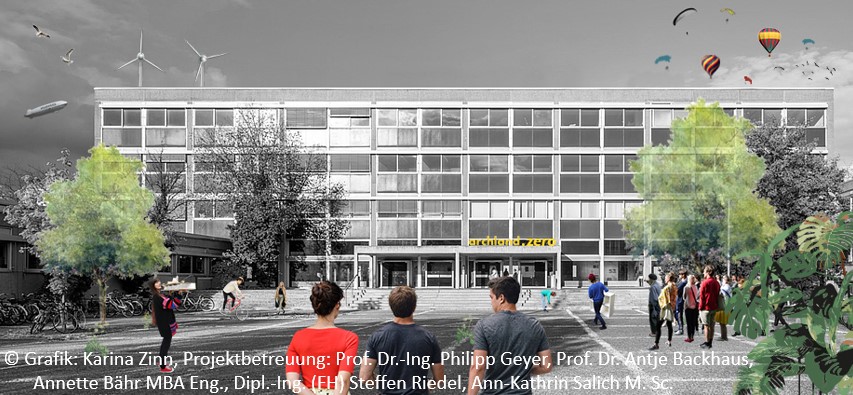
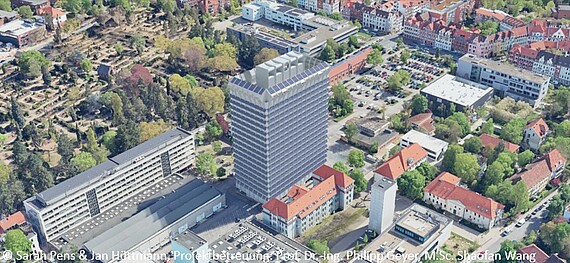
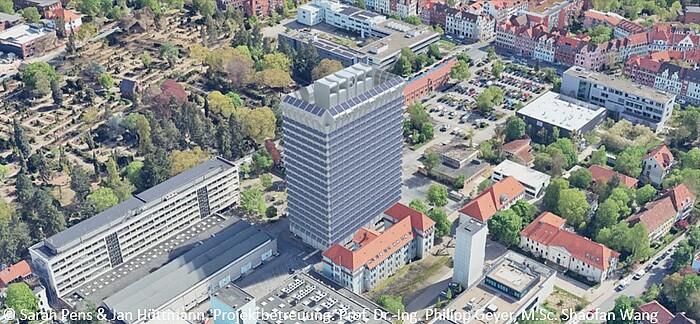
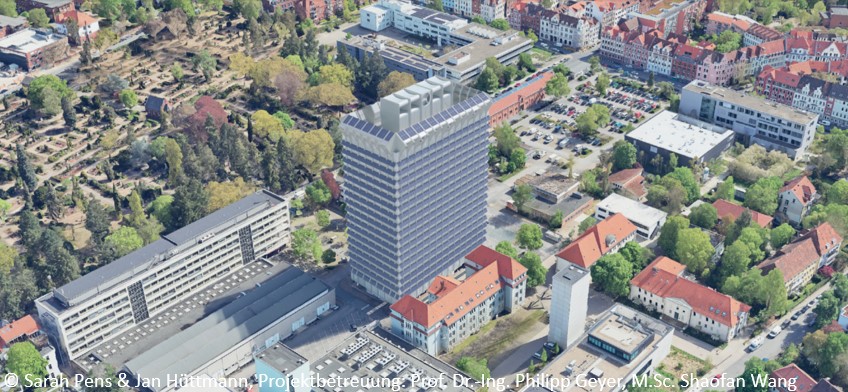
Im Rahmen des zweijährigen SQM-geförderten Projektes „campus.zero“ untersuchen Studierende seit dem SoSe 2023, wie für verschiedene Gebäude das Ziel Klimaneutralität erreicht werden kann.
Die Gebäude selbst sollen als Reallabor erlebbares und begreifbares Vorbild für den gesamten Campus der LUH werden.


Gemeinsam mit verschiedenen Akteuren der LUH (Fakultäten, Instituten, Abteilungen und Dezernaten) sowie externen Experten suchen wir nach sinnvollen Wegen für klimaneutrale Campusgebäude ggf. auch mit Berücksichtigung von Denkmalschutzbelangen im Sinne des nachhaltigen Bauens und den Leitlinien des Neuen Europäischen Bauhauses.
Im Mittelpunkt stehen neben Maßnahmen der Energie- und Ressourceneffizienz die Integration erneuerbarer Energien in die Architekturgestaltung und die interdisziplinäre Zusammenarbeit.
Kerninhalte sind der Aufbau von Kompetenzen für eine ganzheitliche Lösungsentwicklung sowie die dafür erforderlichen Prozesse, unterstützt durch digitale Werkzeuge (z. B. BIM).
Laufzeit 04/2023 bis 03/2025
Förderung
Klimatopf Lehre der LUH